Share This App, Choose Your Platform!
What is it about
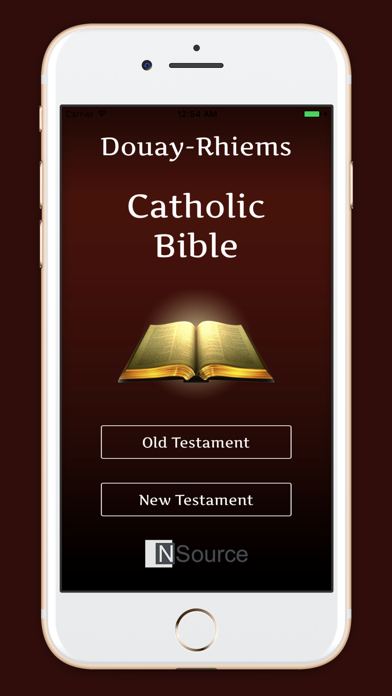
Experience the rich history and tradition of the Catholic faith with the Douay-Rheims Bible, the first officially authorized Catholic Bible translation in English. This translation, which includes the seven Deutero-Canonical books, was painstakingly prepared by English exiles in Flanders in the late 16th century and has remained the foundation of nearly all English Catholic versions. The original texts, as well as the major revision by Dr. Richard Challoner in 1749, are included in this comprehensive app, allowing users to delve into the language and style of the first editions while benefiting from modernized phrasing and diction. With offline access, search capabilities, adjustable font sizes, and the ability to create unlimited tabs for specific verses or books, this user-friendly application is designed to enhance your Bible study experience. Discover the beauty of the Douay-Rheims Bible and immerse yourself in the timeless wisdom of the scriptures. Terms of Use and Privacy Policy can be found on our website.

More App Details
Version
1.5
Rating
Size
MB
Ads help cover our costs:
App Screenshots
Our Review
This is a Douay-Rheims Bible app — the older English Catholic translation that comes from the Latin Vulgate by way of English exiles in the late 1500s. It includes the seven Deuterocanonical books and reads in the Challoner revision from 1749 that most Catholics have actually used.
You get the full Old and New Testaments offline, a search bar, adjustable font size, and the ability to keep multiple tabs open, so you can flip between Isaiah 53 and Matthew 27 without losing your place. The original Rheims-Douay readings are in there alongside the Challoner revision, which is useful if you ever want to compare phrasings or quote the earlier version.
The Douay-Rheims has a particular sound to it — closer to the King James in cadence than to a modern Bible — and for many older Catholics it is the version they grew up hearing. If you have read St. Alphonsus or Cardinal Newman in English, the Douay is the Bible they were quoting. There is a quiet faithfulness in coming back to it.
It fits anyone who prefers traditional language for prayer, or who wants to read along with older spiritual writing that uses Douay phrasing. It is also a good study companion if you are working through the Vulgate or comparing Catholic translations.
It is the bare Bible, not a study Bible. There are no footnotes from the original Challoner edition, no maps, no concordance beyond search. The interface is functional rather than elegant, and the developer is a one-person operation. None of that limits the text itself.
Free. By Dzianis Kaniushyk. On the App Store: Douay-Rheims Catholic Bible. A solid free copy of a Catholic translation that deserves to stay in use.
App Store Description
The Douay-Rheims Bible is a translation of the Bible from the Latin Vulgate into English. It was the first officially authorized Catholic Bible translation in English, and has formed the basis of some later Roman Catholic Bibles in English. It includes the seven Deutero-Canonical books (also known as the Apocrypha). In 1568, English exiles who were members of the college at Douai, in Flanders, founded by William (later Cardinal) Allen, began the work of preparing a Bible translation, which has become the foundation of nearly all English Catholic versions. In October, 1578, Gregory Martin began the work of preparing an English translation of the Bible for Catholic readers, the first such translation into Modern English. Assisting were William Allen, Richard Bristow, Thomas Worthington, and William Reynolds who revised, criticized, and corrected Dr. Martin's work. The college published the New Testament at (Reims/Rhemes) , in 1582 through John Fogny with a preface and explanatory notes. Later, the Old Testament was published at in two parts (1609 and 1610) by Laurence Kellam through the efforts of Dr. Worthington, then superior of the seminary. The Douay-Rheims translation had been prepared before the appearance of the New Testament, but the publication was delayed due to financial difficulties. The religious and scholarly adherence to the Latin Vulgate text led to the less elegant and idiomatic words and phrases often found in the translation. In some instances where no English word conveyed the full meaning of the Latin, a Latin word was Anglicized and its meaning defined in a glossary. Although ridiculed by critics, many of these words later found common usage in the English language. Spellings of proper names and the numbering of the Psalms are adopted from the Latin Vulgate. In 1749 Dr. Richard Challoner began a major revision of the Douay-Rheims Catholic Bible and texts, the spellings and phrasing of which had become increasingly archaic in the almost two centuries since the translations were first produced. He modernized the diction and introduced a more fluid style, while faithfully maintaining the accuracy of Dr. Martin's texts. This revision became the 'de facto' standard text for English speaking Catholics until the twentieth century. It is still highly regarded by many for its style, although it is now rarely used for liturgical purposes. The notes included in this version are generally attributed to Bishop Challoner. The 1610 printing of the second time of the Old Testament includes an appendix containing the non-canonical books 'Prayer of Manasses,' 'Third Booke of Esdras,' and 'Fourth Booke of Esdras' as part of this Catholic Bible. While not part of Challoner's revision, the 1610 texts are placed in the appendices. Also included are the original texts of two short books, 'The Prophecie of Abdias' and 'The Catholike Epistle of Iude the Apostle,' to give the reader a sense of the language of the first editions in comparison to the Challoner revision. Further background on the Douay-Rheims version may be found in a selection from the preface to the 1582 edition and the original glossary included in the appendices.
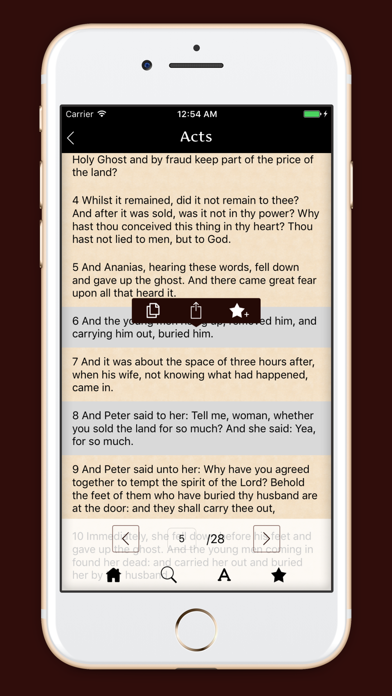
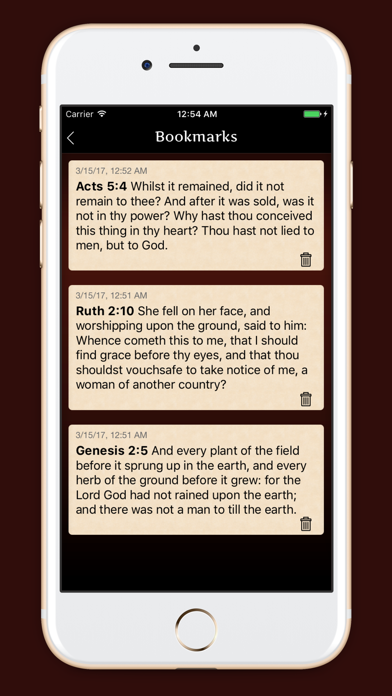
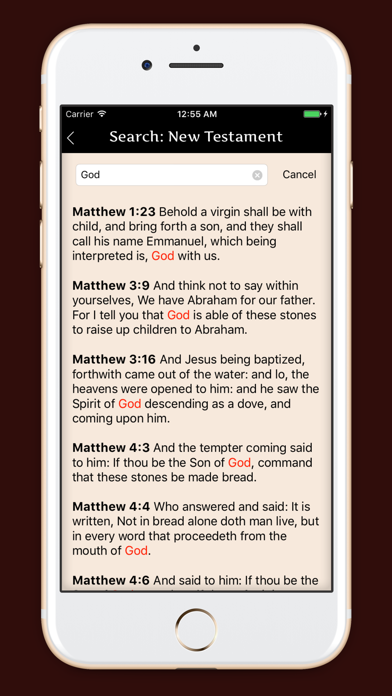
Ease of Bible study with our application is achieved if the following: - The application works without an internet connection (offline); - Ability to search; - Ability to increase / decrease the font; - Ability to create an unlimited number of tabs to a particular verse, one of the books; - If you are interested in the allocation of poems you can copy or send a message; - Ability to scroll through the volume buttons.
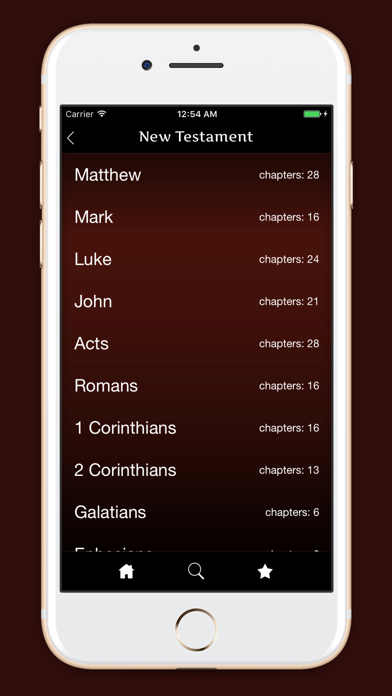
User guide: Each menu item is a separate book, and each separate page in one of the books is the chapter. Place the cursor instead of the chapter number and enter the chapter number. Thus, you will not have to scroll all the chapters, selecting interesting.
Terms of Use - http://apple.nsource.by/terms-of-use.html Privacy Policy - http://apple.nsource.by/privacy-policy.html
CatholicApps.com does not own this application and only provides images and links contained in the iTunes Search API, to help our users find the best apps to download. If you are the developer of this app and would like your information removed, please send a request to [email protected] and your information will be removed.
Similar Apps to Douay – Rhiems Catholic Bible
Free
Free